
The QR code (Quick Response code; 2D code) was developed in 1994 by Denso (Japan). It is square and easily recognizable by its finder patterns—nested light and dark squares in three corners.
The symbol elements are modules (squares), with a minimum of 21 x 21 and a maximum of 177 x 177 elements within the symbol. There are 4 error correction levels that allow reconstruction of a damaged code ranging from 7% (Level L) up to 30% (Level H). Up to 7,089 numeric characters, 4,296 alphanumeric characters, or 1,817 Japanese characters (Kanji/Kana) can be encoded. The content can be divided into up to 16 individual codes. The QR code is standardized by AIM, where a code specification is available.
In the field of mobile tagging, the QR code is one of the most frequently used codes. A specialized solution here is the combination of a QR code and graphics to create Q-Logo, developed by the Japanese company logoq.net.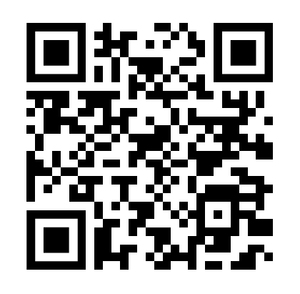
Example of a QR code
← WikiLED A–Z
WikiLED · LED-Glossar
QR Code
The QR code (Quick Response code; 2D code) was developed in 1994 by Denso (Japan). It is square and easily recognizable by its finder patterns—nested light and dark squares in three corners…

